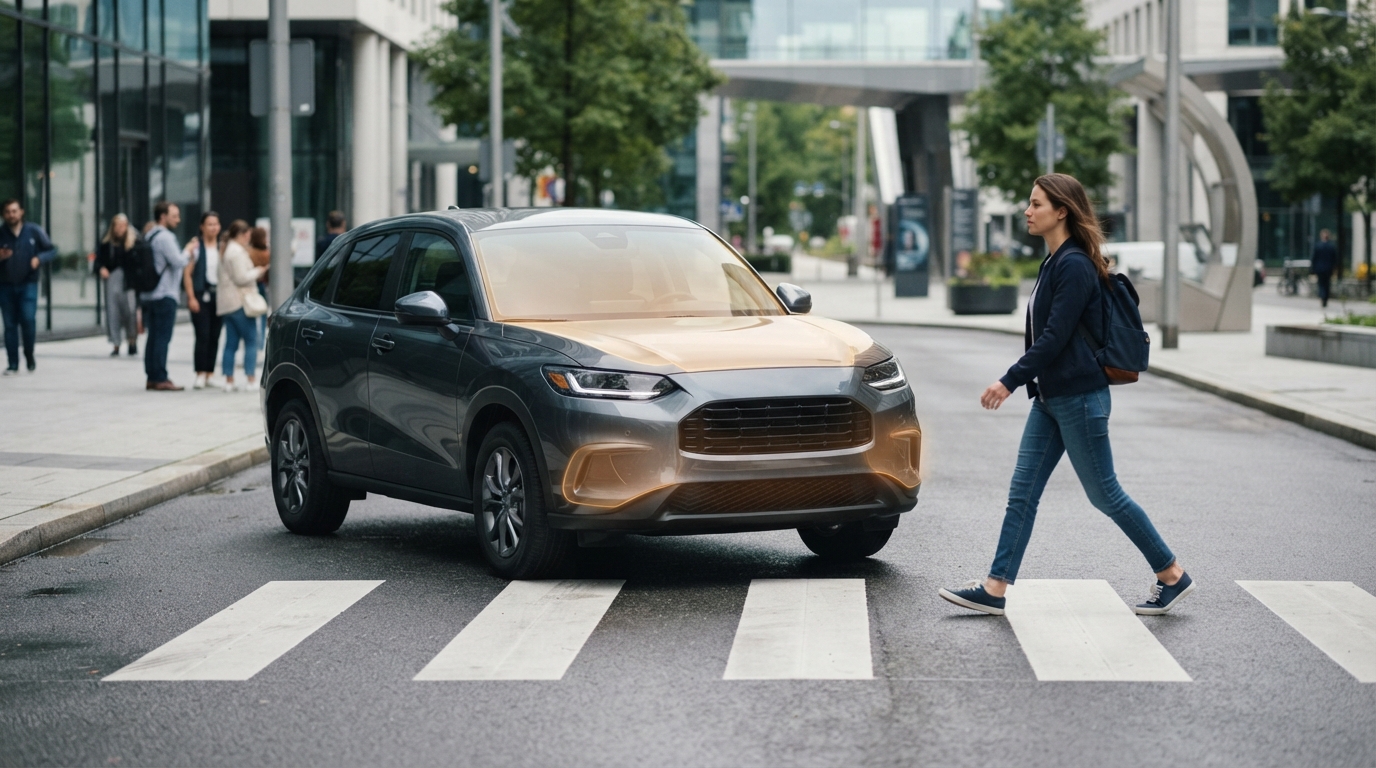
Pedestrian safety ratings are becoming a new factor for car buyers in 2026. For the first time, the National Highway Traffic Safety Administration is publishing pedestrian-protection assessments as part of its well-known 5-Star Safety Ratings program.
The first results apply to model year 2027 vehicles. NHTSA says 102 models from 10 manufacturers met its new pedestrian protection performance criteria in the inaugural round.
That creates a new way to compare vehicles. Buyers have long looked at frontal crash ratings, side-impact protection, rollover performance, airbags, and driver-assistance systems. Now they can also see how vehicle design performs in standardized tests intended to measure injuries to people outside the car.
The new information does not mean a vehicle can make a pedestrian collision harmless. Speed, impact angle, driver behavior, pedestrian movement, road conditions, and many other factors still affect the outcome.
Instead, the ratings add another useful piece to the modern car-buying checklist.
How Pedestrian Safety Ratings Work for 2027 Vehicles
NHTSA added pedestrian crashworthiness assessments to its New Car Assessment Program, commonly known as NCAP. This is the federal program behind the familiar 5-Star Safety Ratings that many shoppers already use when comparing new vehicles.
The new pedestrian tests focus on the physical front-end design of the vehicle. They look at what may happen after the vehicle makes contact with a pedestrian.
That is different from technology designed to avoid the impact entirely.
What the New Pedestrian Tests Actually Measure
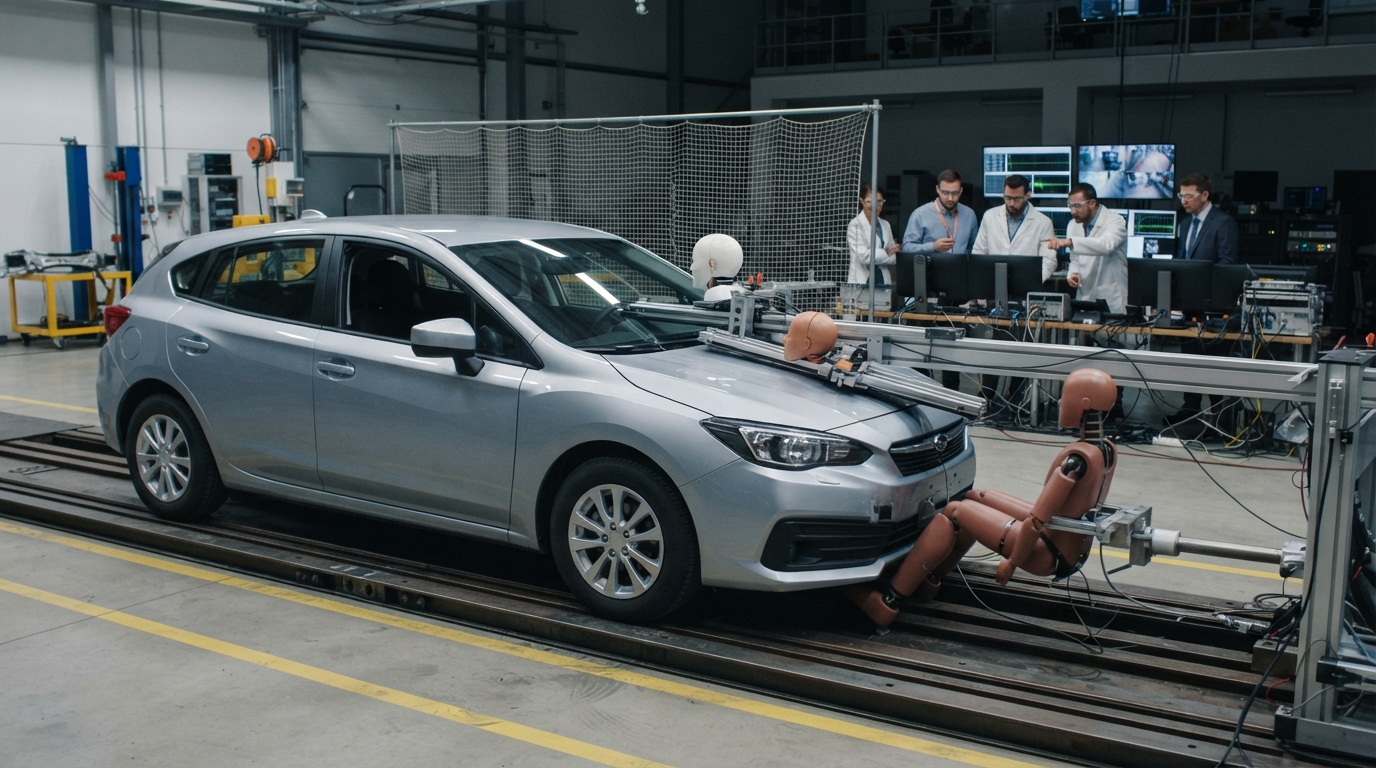
NHTSA uses three standardized impact scenarios to evaluate pedestrian protection.
The first uses child and adult headforms that strike areas around the hood and windshield. The second evaluates upper-leg impact at the leading edge of the hood. The third uses a full lower-limb impactor at the bumper.
Together, these tests examine potential injury risks to the head, hips, legs, and knees.
The design of the hood, bumper, windshield area, and structures underneath those surfaces can influence how forces move through the body during a collision.
Vehicle Shape Can Affect More Than Styling
Shoppers usually notice front-end design because of appearance. A large grille, low hood, sharp body lines, or high SUV nose can make one vehicle look very different from another.
Those shapes can also matter during an impact.
Pedestrian crashworthiness testing encourages manufacturers to think about how external surfaces manage energy when they contact a person.
For example, the amount of space between a hood and hard components underneath can affect how the surface responds to a head impact. Bumper and hood-edge design can influence forces applied to the legs and hips.
That does not mean shoppers should judge safety simply by looking at the shape of a vehicle. The standardized tests exist because visual appearance alone cannot tell you how the structure performs.
A Missing Rating Does Not Automatically Mean the Vehicle Failed
This is one of the most important details for buyers.
NHTSA’s vehicle pages can show several statuses for the new pedestrian assessment. A model may meet the criteria, fail to meet the criteria, have a rating still pending, or have no submitted result.
Therefore, a model that does not appear among the first 102 vehicles should not automatically be called unsafe or treated as a failure.
Some results may simply not be available yet.
Buyers should check the exact model and model year through NHTSA rather than relying on a social media list or headline.
The agency says a yellow box on individual vehicle ratings pages will show the pedestrian protection status.
Pedestrian Protection and Automatic Emergency Braking Are Different
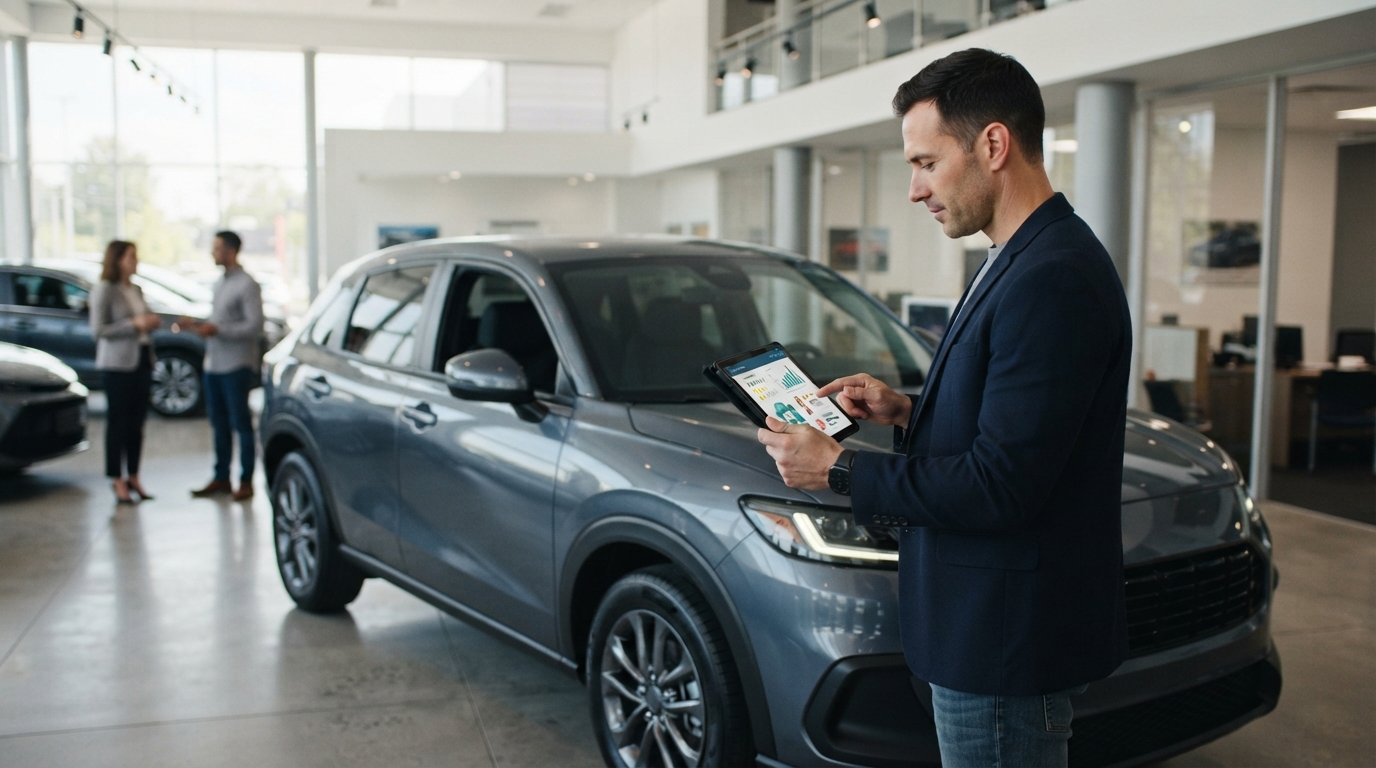
One potential source of confusion is the difference between pedestrian crashworthiness and pedestrian automatic emergency braking.
They address different stages of a possible collision.
Pedestrian automatic emergency braking, often called pedestrian AEB or PAEB, uses cameras, radar, or other sensors to identify a person in the vehicle’s path. The system may warn the driver and apply the brakes if it detects a possible collision.
Pedestrian crashworthiness focuses on the physical outcome if contact occurs.
A buyer should therefore look at both avoidance technology and impact protection.
CarIron’s guide to automatic emergency braking in 2026 explains how AEB and pedestrian detection work, what buyers should inspect, and why the technology still requires an attentive driver.
A Car Can Perform Differently in Avoidance and Impact Tests
A vehicle may have strong pedestrian AEB technology but a different result for pedestrian crashworthiness.
The reverse can also happen. A front-end design may perform well in standardized impact tests while the vehicle’s driver-assistance technology has different capabilities or limitations.
That is why shoppers should avoid reducing safety to one score.
NHTSA’s model year 2027 information includes updated frontal, side, and rollover crashworthiness ratings, pedestrian crashworthiness information, and evaluations of several crash-avoidance technologies.
Those technologies include automatic emergency braking, pedestrian AEB, lane keeping assist, blind spot warning, and blind spot intervention.
A complete vehicle comparison should look at the package rather than one feature.
How Car Buyers Should Use Pedestrian Safety Ratings in 2026
The new ratings are most useful when shoppers treat them as one part of a larger decision.
Start with the type of vehicle that fits your actual needs. Consider passenger space, cargo room, fuel or charging costs, reliability, insurance, financing, and daily driving conditions.
Then compare safety information among vehicles that already fit those needs.
A family shopping for a compact SUV may compare pedestrian protection, AEB, headlights, blind-spot technology, crash ratings, child-seat access, and insurance costs among several similar models.
A city driver may place extra value on pedestrian detection and external crash protection because of frequent driving around intersections, crosswalks, parking areas, and cyclists.
New and Used Buyers Should Verify the Exact Model Year and Trim
Safety equipment can change from one model year to the next.
A feature that comes standard on a 2027 model may have been optional on the 2025 version. A manufacturer may also change cameras, radar hardware, software, bumper structure, or other components during a vehicle generation.
That makes exact-model research important.
Check the VIN, model year, trim, safety package, and original equipment rather than assuming every vehicle with the same name has identical technology.
Used-Car Repairs Can Affect Modern Safety Systems
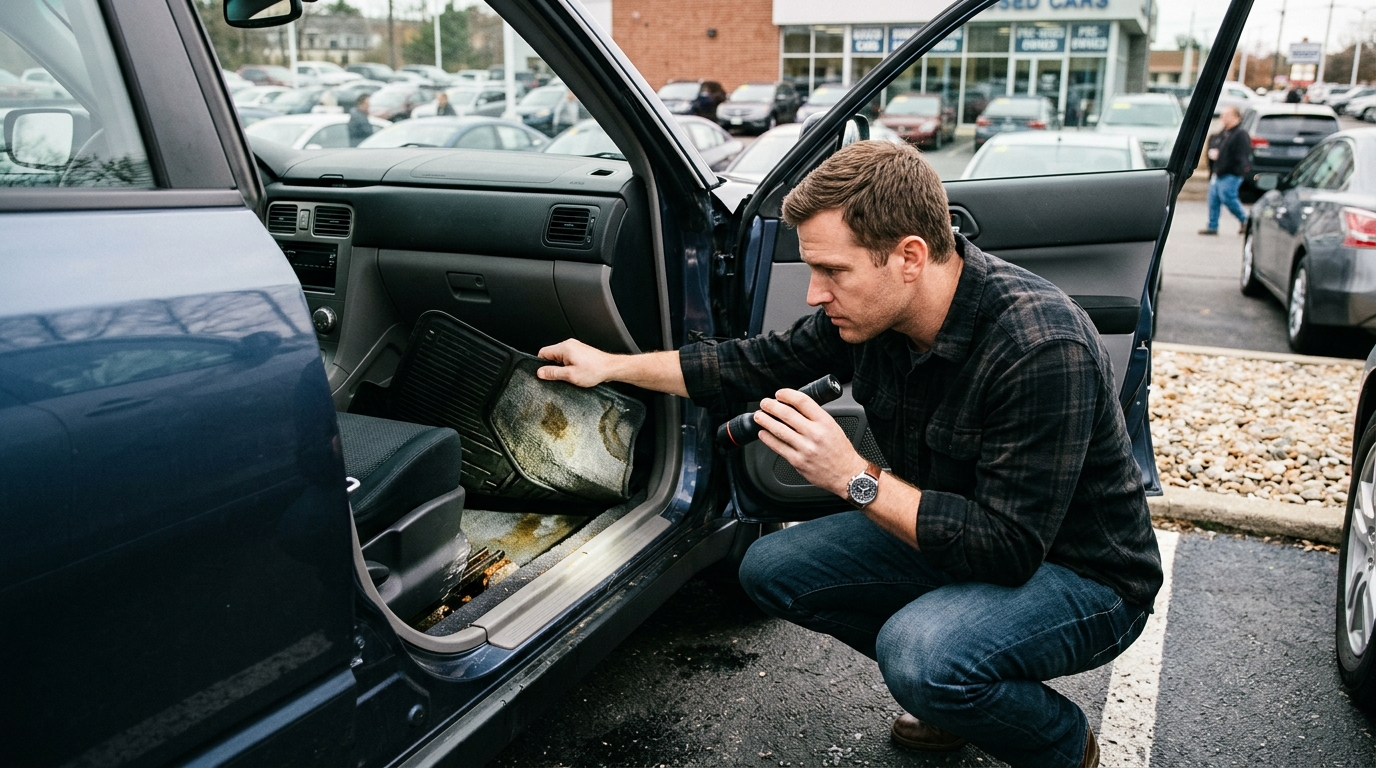
Used-car shoppers should pay particular attention to previous front-end damage.
A vehicle may have cameras, radar units, parking sensors, or other hardware mounted behind the windshield, bumper, grille, or exterior panels. Repairs in those areas may require calibration.
A car can look cosmetically repaired while still having a warning light, misaligned sensor, incorrect replacement part, or poorly calibrated safety system.
Ask for repair records when possible. During the test drive, check the dashboard for driver-assistance warnings and review the vehicle settings.
Never intentionally create a dangerous situation to test automatic emergency braking. Use a qualified inspection when there are questions about repaired sensors or safety equipment.
Modern vehicles also rely heavily on software and connectivity. CarIron’s connected car data privacy guide explains how driver profiles, apps, navigation, vehicle data, and connected services now belong on the car-buying checklist.
Price still matters as well. A safer vehicle needs to fit the total ownership budget. Buyers should compare financing, depreciation, insurance, fuel or electricity, repairs, registration, and optional subscriptions.
The site’s guide to car affordability in 2026 explains why a manageable monthly payment does not always mean a vehicle is affordable long term.
The new pedestrian safety ratings add one more useful comparison point to that decision.
They also reflect a broader change in vehicle safety. For decades, crash testing focused heavily on protecting occupants inside the vehicle. The 2027 program gives buyers more standardized information about protection for people outside it as well.
That is especially relevant as large SUVs, crossovers, pickups, EVs, scooters, cyclists, and pedestrians increasingly share busy streets.
No rating makes careful driving optional. Even a vehicle with excellent crash protection and advanced pedestrian AEB cannot predict every situation or overcome unsafe speed and distraction.
Think of the new assessment as another tool.
When comparing 2027 vehicles, check the traditional 5-Star Safety Ratings. Review pedestrian protection status. Compare pedestrian AEB and other driver-assistance features. Verify what comes standard on the trim you are actually buying.
If shopping used, confirm that safety equipment survived previous repairs and still operates correctly.
For the latest model-specific information, visit the official NHTSA announcement on the first 2027 pedestrian safety test results.
The smartest car purchase is rarely based on one rating, one screen, or one headline.
Instead, look for a vehicle that combines practical ownership costs, dependable technology, strong occupant protection, useful crash-avoidance features, and increasingly, better protection for the people sharing the road outside the car.