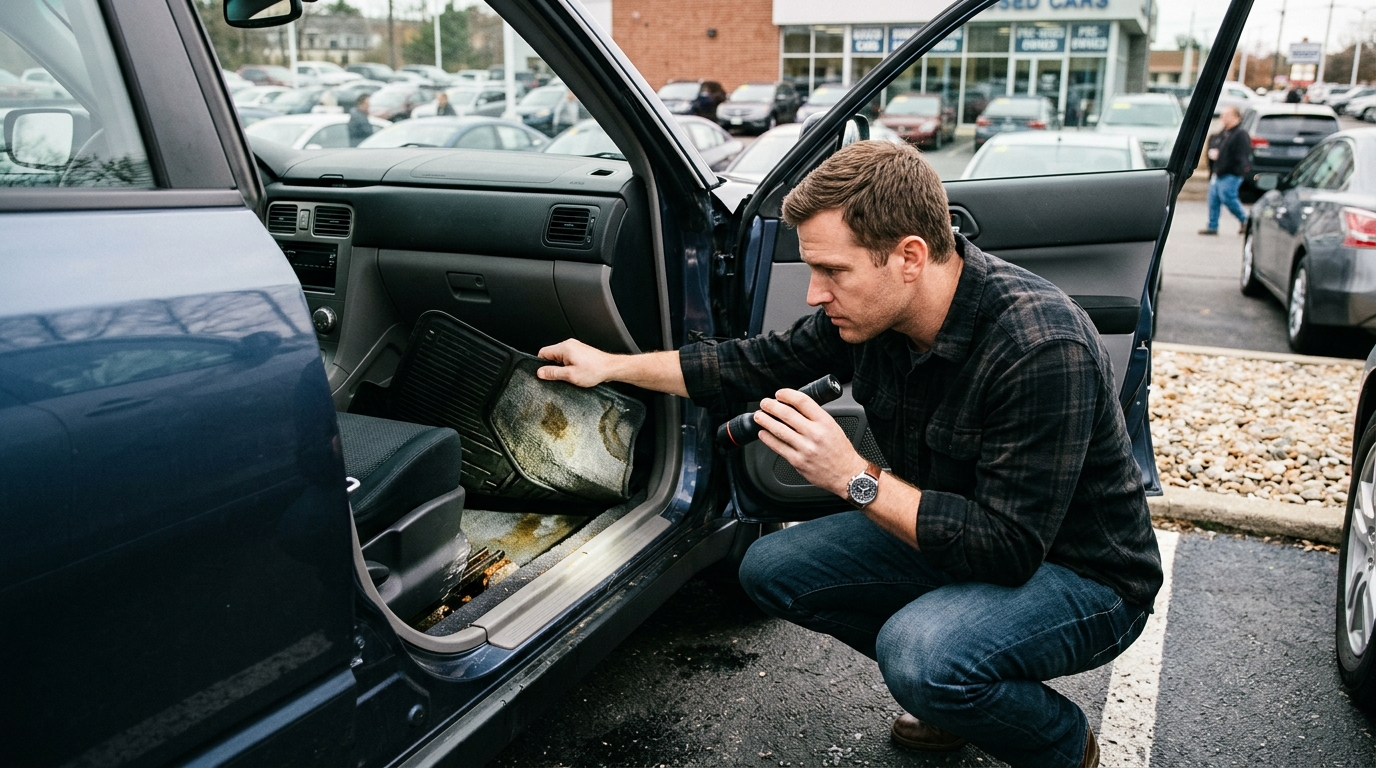
Flood-damaged used cars are one of the biggest risks buyers should watch for in 2026. A vehicle can look clean, polished, and affordable on the outside while hiding serious water damage underneath the carpet, inside the wiring, behind the dashboard, or inside electronic control modules. That is what makes flood cars dangerous. The damage is not always obvious during a quick test drive.
Used car shoppers are already dealing with high prices, financing pressure, insurance costs, subscriptions, repairs, and fast-changing vehicle technology. Adding hidden flood damage to that list can turn a good deal into an expensive mistake. A water-damaged vehicle may run normally at first, then develop electrical problems, warning lights, mold smells, rust, brake issues, sensor failures, or engine trouble weeks or months later.
The problem is not limited to areas that recently flooded. Flood-damaged vehicles can be cleaned, moved across state lines, retitled, and resold in markets where shoppers are not expecting storm-damaged cars. That means every used car buyer should know the warning signs, even if they live far away from hurricane zones or flood-prone areas.
This guide explains how to spot flood-damaged used cars in 2026, what records to check, why modern vehicles are more vulnerable to water damage, and what buyers should do before signing any deal.
Why Flood-Damaged Used Cars Are Harder to Spot in 2026
Older cars had fewer electronics, fewer sensors, and simpler systems. Modern vehicles are different. Today’s cars can include advanced driver-assistance systems, infotainment screens, connected apps, electric seat controls, cameras, radar sensors, airbag modules, hybrid systems, EV batteries, keyless entry, USB ports, navigation, and dozens of electronic control units. Water can damage these systems slowly and unpredictably.
A car may start, shift, and drive during the test drive, but hidden corrosion can continue spreading through connectors and wiring. That is why buyers should not rely only on appearance. A seller can shampoo the carpet, detail the interior, replace floor mats, spray air freshener, and polish the exterior. None of that proves the vehicle is safe.
The Federal Trade Commission warns used car buyers to check for flood damage signs such as mud or sand under seats or dashboard areas, rust around doors, loose or stained carpet, mold odors, decay smells, or strong cleaning-product odors. That advice is simple, but it can save shoppers from a costly purchase.
This topic connects closely with Car Iron’s guide on car affordability in 2026. A car is not affordable if hidden flood damage creates repair bills, safety concerns, and poor resale value after purchase.
Modern Electronics Make Water Damage More Expensive
Floodwater can reach parts of the car that are expensive to diagnose and repair. Wiring harnesses, sensors, airbag modules, seat motors, infotainment systems, fuse boxes, control units, hybrid components, and charging equipment may all be affected. Even small amounts of water intrusion can create corrosion, intermittent faults, and warning lights that come and go.
This is especially important for newer used cars. A vehicle may have lane-keeping assist, adaptive cruise control, parking sensors, cameras, blind-spot monitoring, and emergency braking. If water damages those systems, the repair may not be cheap. Worse, a safety feature may appear to work until the driver actually needs it.
Check the Interior Like an Inspector, Not a Shopper
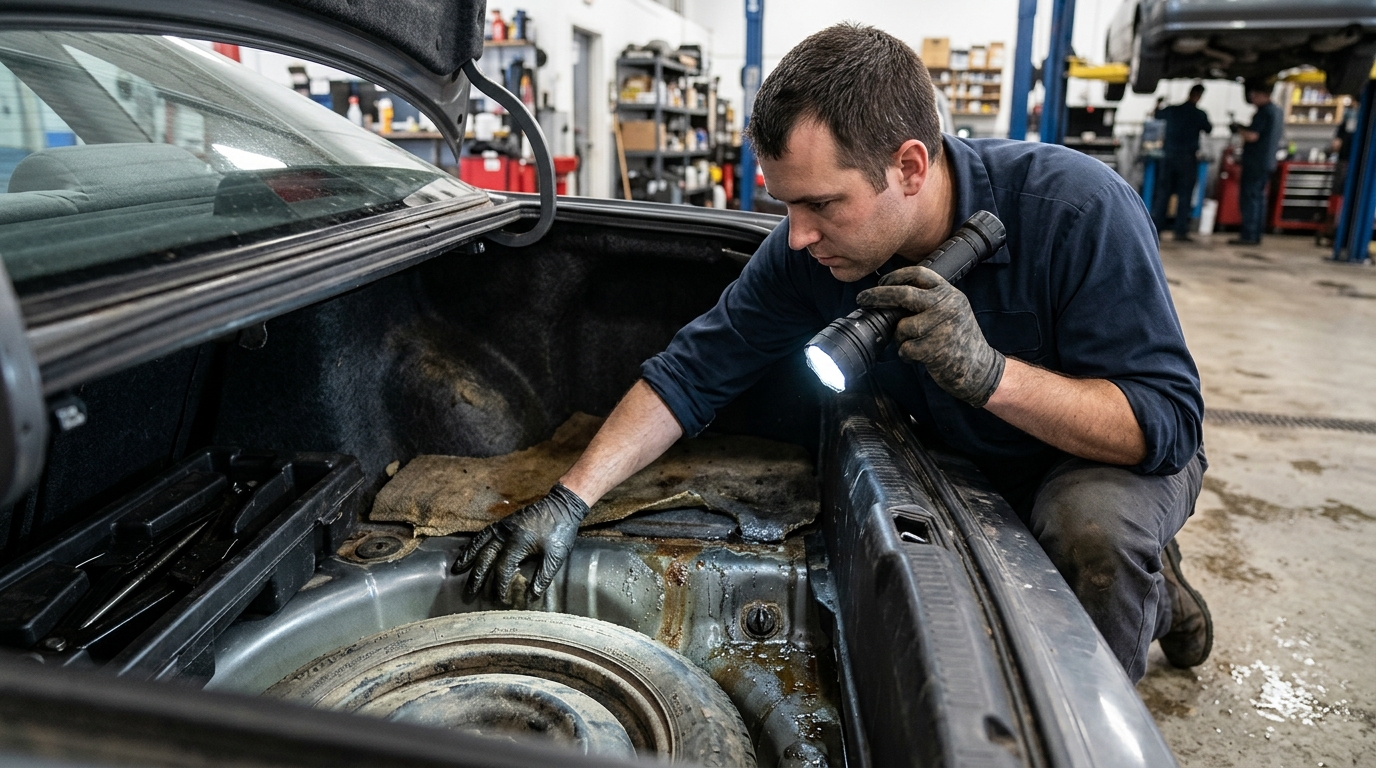
Many buyers inspect a used car like they are choosing furniture. They look at color, comfort, touchscreen size, seat condition, and cargo space. With flood-damaged cars, you need to inspect like a detective. Look under the floor mats. Check under the seats. Pull the seatbelts all the way out and look for stains, grit, or mildew. Open the trunk and spare tire well. Look under rubber seals and around door edges.
Do not ignore smells. A musty smell can suggest mold or moisture. A heavy perfume or chemical smell can also be suspicious because it may be covering a bad odor. If the car smells too strongly cleaned, ask why. A normal used car should not smell like someone is trying to hide something.
Look for Mismatched Materials and Unusual Cleaning
Flood-damaged vehicles are often cleaned aggressively before resale. That can leave clues. Watch for brand-new carpet in an older car, mismatched upholstery, missing floor mats, water lines inside the trunk, dirt in seat tracks, or rust on exposed bolts. Check whether the interior wear matches the mileage. A low-mileage car with replaced carpets and rusty seat rails should raise questions.
Also check lights, windows, locks, mirrors, seat controls, audio, backup camera, climate control, charging ports, and dashboard warnings. Electrical problems can be signs of water intrusion. A seller who says “it just needs a reset” or “that light always comes on” may be minimizing a bigger problem.
Vehicle History Reports Help, But They Are Not Enough
A vehicle history report is a smart starting point. It may show flood title branding, salvage history, insurance total loss records, registration in flood-prone areas, mileage issues, or ownership changes. But history reports are not perfect. If flood damage was never reported to insurance, repaired privately, or hidden through title problems, the report may not tell the full story.
The National Motor Vehicle Title Information System says it is designed to protect consumers from fraud and unsafe vehicles and to help prevent stolen vehicles from being resold. Buyers can use title-history tools as part of their research, but they should still get the vehicle inspected before purchase.
This also connects with Car Iron’s article on used car subscription traps in 2026. Both topics remind buyers that a used car’s real value is not always visible in the listing. Locked features, expired trials, title problems, and hidden damage can all change what the car is truly worth.
Watch for Title Washing and Out-of-State Moves
Title washing happens when a vehicle’s damaged history becomes harder to see after it moves through different states, sellers, or title systems. A flood-damaged vehicle may have a branded title in one place, then appear cleaner to buyers later. That is why shoppers should not rely only on the printed title handed over by the seller.
Ask direct questions. Has the vehicle ever been flooded? Has it ever had water damage? It ever been declared a total loss? It been titled in another state? Can the seller provide service records and a vehicle history report? If the answers are vague, rushed, or defensive, slow down.
How to Protect Yourself Before Buying a Used Car
The safest approach is to combine three steps: inspect the vehicle yourself, check the vehicle history, and pay for an independent pre-purchase inspection. Skipping any of these steps can cost far more than the inspection fee. A mechanic can check areas most buyers miss, including underbody corrosion, electrical connectors, fluids, brake components, engine bay signs, and hidden water intrusion.
A pre-purchase inspection is especially important if the vehicle price seems unusually low. A cheap price can be attractive, but it can also be bait. If the seller is pushing you to buy quickly or discouraging inspection, that is a major warning sign.
Buyers comparing gas, hybrid, and electric vehicles should also read Car Iron’s EV vs hybrid cost in 2026. Water damage can be especially concerning when a vehicle has expensive battery, charging, or high-voltage components.
Pre-Purchase Inspection Checklist for Flood Risk

Before buying, ask a mechanic to check the engine bay, undercarriage, wheel wells, brakes, suspension parts, fluid condition, wiring, connectors, fuse boxes, dashboard electronics, seat rails, trunk area, and carpets. Ask them to look for corrosion, mud, sand, moisture, mold, and signs of recent disassembly or unusual cleaning.
During the test drive, listen and observe carefully. Do warning lights appear? Does the air conditioning smell musty? Do the windows, locks, and mirrors work correctly? Does the infotainment system freeze or reset? Do driver-assistance features show errors? Does the car pull, vibrate, or brake unevenly?
If you are looking at an EV or plug-in hybrid, hidden flood damage deserves even more caution. Charging systems, battery packs, cooling systems, and electronics can be expensive to inspect and repair. Car Iron’s guide on EV charging costs in 2026 is a useful internal link because EV buyers should understand the full ownership picture before purchasing.
Simple Red Flags That Should Make You Walk Away
Walk away if the seller refuses an independent inspection, avoids direct flood-damage questions, cannot explain title history, offers a price far below market value, pressures you to buy immediately, or says the vehicle history report is unnecessary. Also be cautious if the car has strong odors, wet carpet, rust in odd places, dirty seat tracks, foggy lights, or unexplained electrical issues.
Do not let a clean exterior distract you from the risk. Flood damage is often hidden where casual shoppers do not look. The best used car purchase is not the fastest one. It is the one that holds up after research, inspection, and paperwork review.
Flood-damaged used cars in 2026 are a real risk because modern vehicles rely on electronics that can be expensive and difficult to repair after water exposure. A good-looking car can still hide corrosion, mold, damaged wiring, title problems, and future safety issues. Before buying, check the signs, review the history, ask direct questions, and get an independent inspection.
If the seller makes that process difficult, take it as a warning. There will always be another car. It is better to walk away from a suspicious deal than spend years paying for a vehicle that was damaged before you ever owned it.