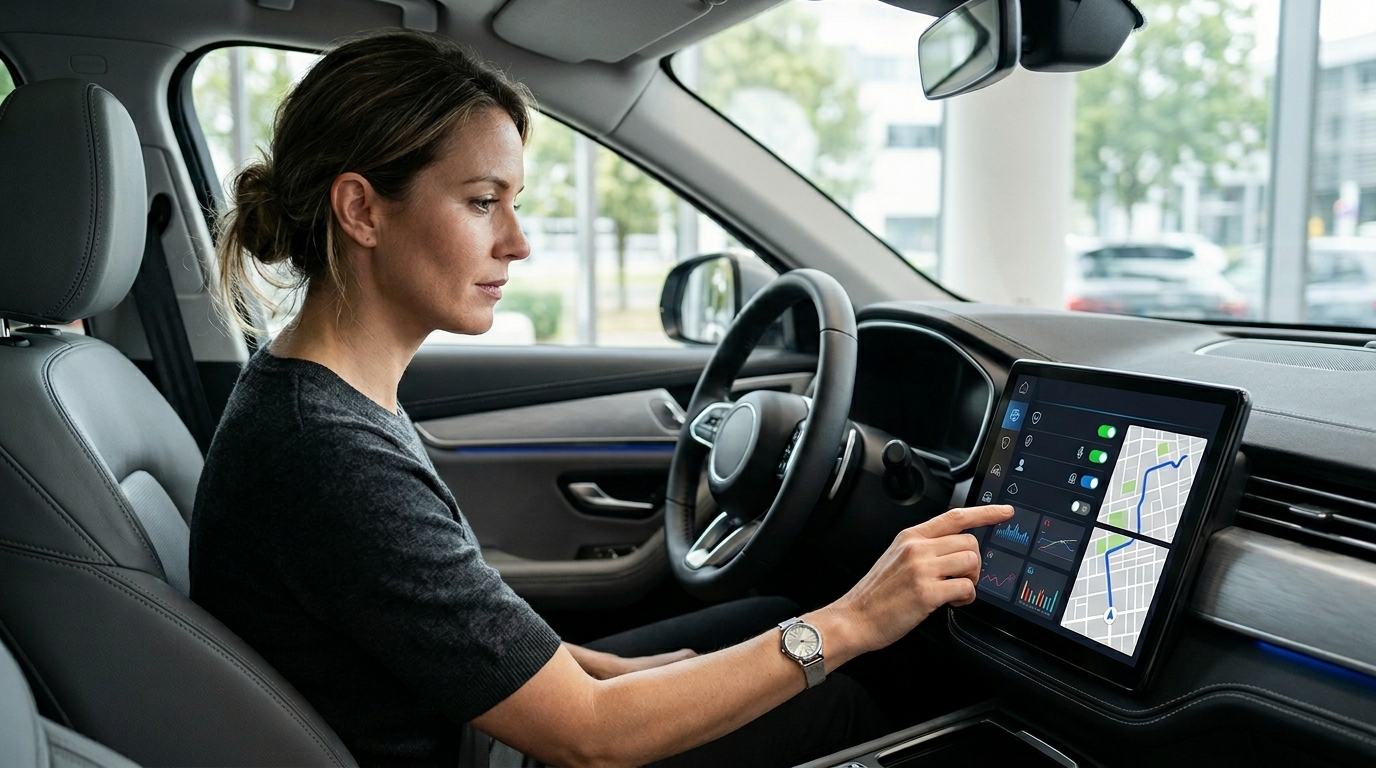
Connected car data privacy now belongs on every modern car buyer’s checklist. Years ago, shoppers mainly looked at price, mileage, safety ratings, comfort, fuel economy, and reliability. Those factors still matter, but today’s vehicles also collect digital information every time drivers use navigation, mobile apps, voice assistants, driver profiles, remote start, charging tools, or connected safety features.
A modern car can act like a smartphone on wheels. It may track routes, store preferences, connect to cloud services, receive software updates, and communicate with manufacturer apps. These tools can make ownership easier. They can help drivers unlock the car from a phone, schedule maintenance, monitor EV charging, find the vehicle in a parking lot, or get real-time service alerts.
That convenience comes with a trade-off. Buyers should understand what information the vehicle collects, who can access it, how companies use it, and how owners can control it. In 2026, car privacy is no longer a small tech issue. It affects families, commuters, used car buyers, EV owners, rideshare drivers, and anyone who connects a phone to a dashboard.
This guide explains why connected car data privacy matters, what buyers should check before purchase, and how owners can protect their personal information after they drive home.
Why Connected Car Data Privacy Is Now a Buying Issue
Modern cars combine mechanical engineering, software, sensors, wireless connections, and cloud-based services. A connected vehicle may gather information from navigation systems, mobile apps, cameras, driver-assistance tools, infotainment screens, charging systems, remote controls, and diagnostic features.
Some data helps the vehicle work properly. Other data helps drivers enjoy useful features. However, manufacturers, service providers, app platforms, insurers, analytics companies, or business partners may also gain access to certain information depending on the vehicle, account settings, and service terms.
What data modern cars may collect
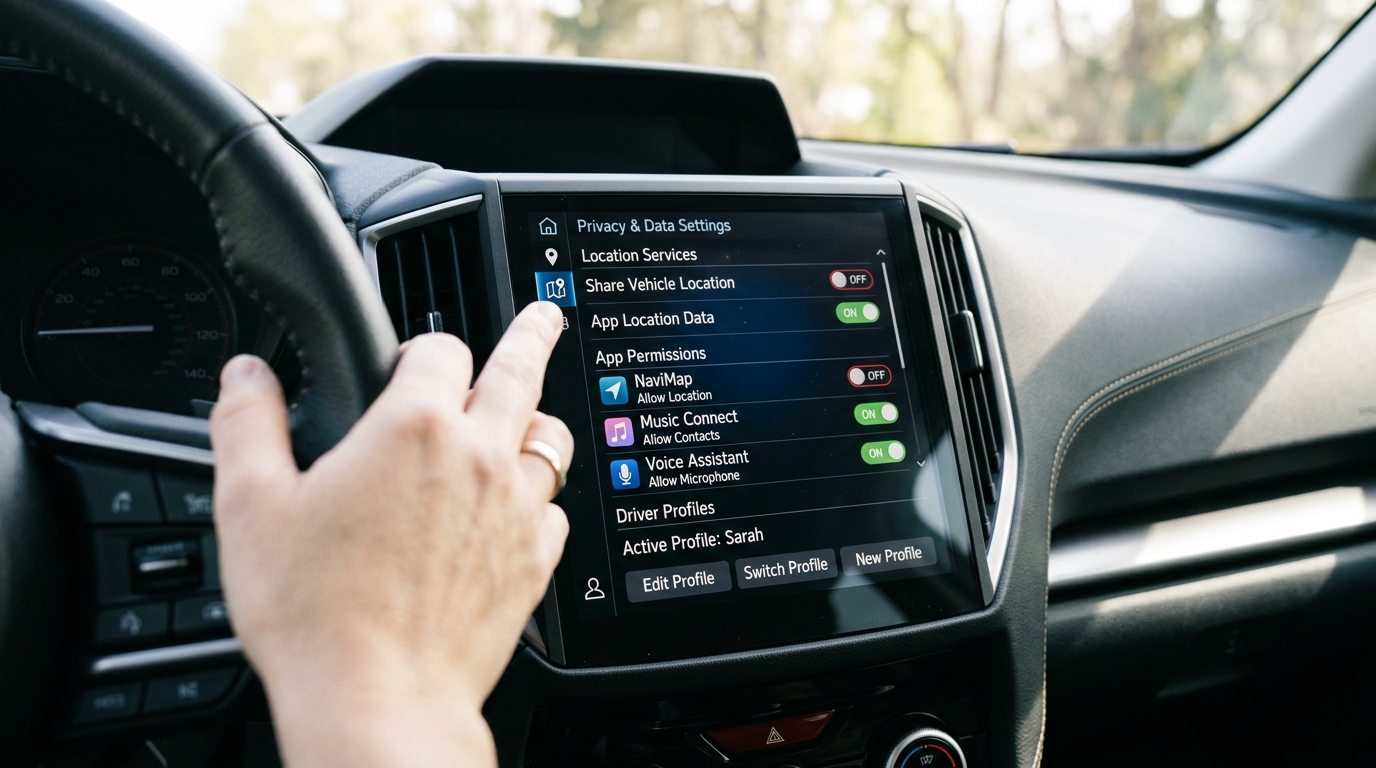
Connected vehicles may collect location history, speed patterns, braking events, acceleration habits, mileage, routes, maintenance alerts, battery usage, charging behavior, infotainment preferences, phone contacts, voice commands, and driver profile settings. Some vehicles also use cameras and sensors for driver-assistance systems.
Not every vehicle collects the same data. Some features also require more information than others. Navigation needs location access. Remote-start apps need account access. EV charging tools may track charging habits. Driver-assistance systems may use sensors to read road conditions.
The real issue is transparency. Buyers should know what the car collects before they activate connected services. A useful feature should improve ownership without forcing drivers to give up more information than necessary.
Location and driving behavior deserve extra attention
Location and driving behavior data can reveal personal routines. A vehicle may show where someone lives, works, shops, travels, or spends time. Driving behavior may show hard braking, fast acceleration, late-night trips, mileage, and route habits.
That information can create privacy concerns when companies share it with third parties or use it for purposes the driver did not expect. Buyers should ask direct questions before they agree to connected services. Does the system share data with insurers? Can the owner opt out? Can the driver delete old records? Will turning off data sharing limit basic features?
A dealership may not always explain these details during a test drive. Buyers need to open the settings menu, review app permissions, and check the privacy options before they commit.
Apps and connected services create more data trails
Connected car apps add another layer of privacy risk. A mobile app may show vehicle location, charging status, trip history, service reminders, door lock controls, climate controls, and account details. If someone gains access to the account, that person may see more than basic vehicle information.
Owners should treat car apps like financial or email accounts. Use strong passwords, turn on multi-factor authentication when available, and avoid sharing login access casually. When selling or lending a vehicle, remove old users and check account permissions.
This topic connects naturally with connected car cybersecurity in 2026. Privacy and security work together. Weak account protection can expose vehicle data, app access, and personal driving information.
Why privacy policies are hard to understand
Automotive privacy policies often use long legal language. Buyers may see connected service agreements, app terms, trial subscriptions, data-sharing notices, and account setup screens during activation. Many people click through these prompts quickly because they want to use the vehicle’s features right away.
That habit creates problems. A driver may agree to location sharing, app tracking, diagnostics, marketing preferences, or connected service terms without knowing what each setting means. Car companies should explain privacy choices in plain language, but buyers should still review the details before saying yes.
Consent screens do not always mean clear consent
A consent screen should give drivers a real choice. The owner should know what the system collects, why it collects it, and how the company may use it. A simple “accept” button does not always explain those details clearly.
This matters even more for shared vehicles. One family member may activate a connected feature that affects everyone who drives the car. A used vehicle may still contain the previous owner’s account. A dealer may help set up the app, but the buyer should review every setting personally afterward.
Drivers should also revisit privacy settings after software updates. Updates may add new features, move menu options, or change permissions. Do not ignore new privacy prompts just because they appear during a busy day.
How Buyers Can Protect Themselves Before and After Purchase
Smart buyers do not need to avoid connected cars. That would make little sense because modern vehicles continue to rely more on software every year. Instead, shoppers should treat privacy like safety, warranty coverage, fuel economy, and resale value.
This matters even more as vehicles become software-defined. CarIron already covered this shift in What Is a Software-Defined Car and Why It Matters in 2026. As cars depend more on software, drivers need more control over data, updates, apps, and account access.
Smart questions to ask before buying a connected car
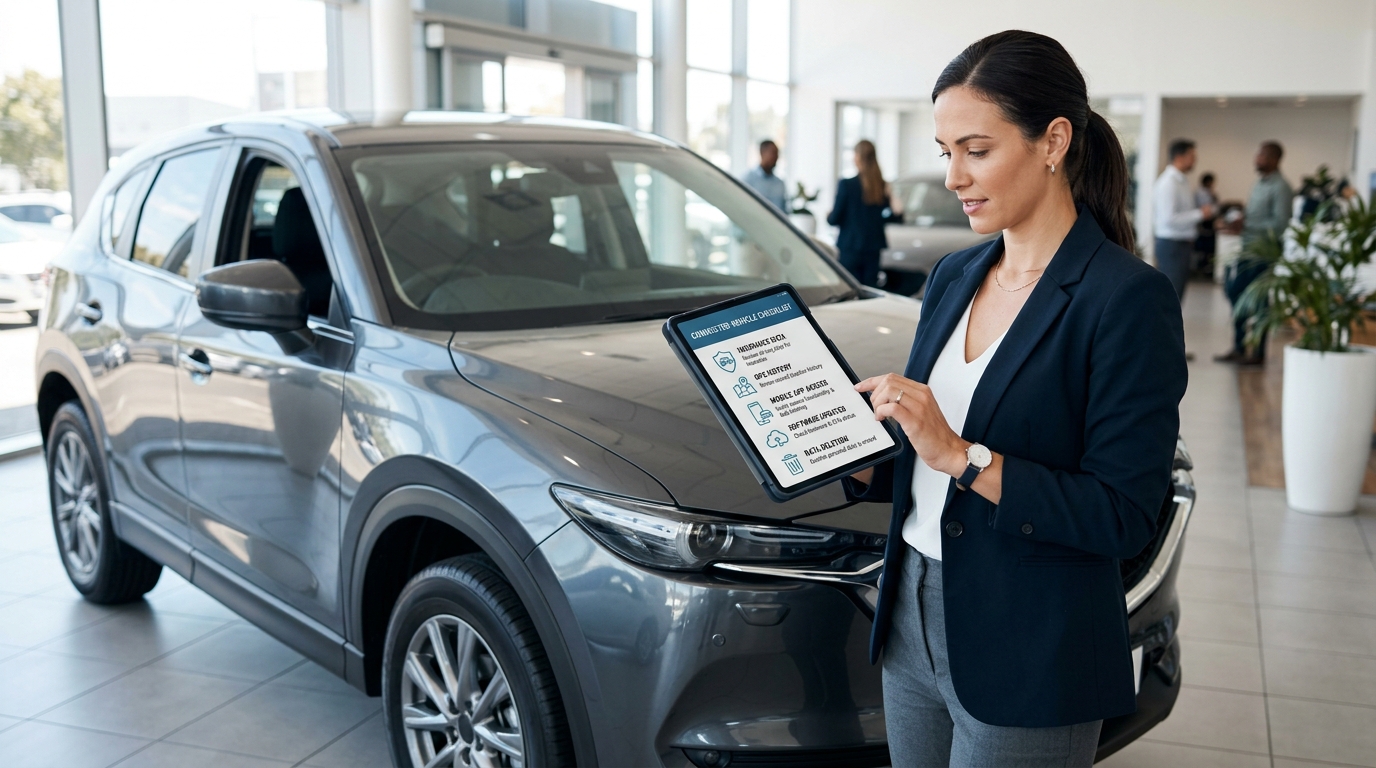
Before buying, ask whether the vehicle uses a connected app, what features require an account, and whether the owner can turn off location sharing. Ask whether the car tracks driving behavior, whether the company shares data with third parties, and whether connected services require a subscription after the trial period.
Buyers should also check how the car handles software updates. Will the manufacturer support the vehicle for several years? Can owners manage privacy settings inside the dashboard, inside the app, or only through a website? Does the car use an AI assistant? If yes, ask how the assistant handles voice commands, saved preferences, routes, and account information.
This also connects with in-car AI assistants in 2026. AI-powered dashboards may improve convenience, but they also create more privacy questions. Voice commands, route habits, music choices, contact access, and personal preferences can become part of the connected car experience.
Used cars need a digital reset too
Used car buyers should check digital history before they finish the purchase. A vehicle may still contain saved phones, driver profiles, navigation history, garage addresses, Wi-Fi settings, app access, and connected service accounts from the previous owner.
Ask the seller or dealer to remove old profiles and perform a factory reset on the infotainment system. After that, create a new account and review privacy settings from the beginning. Do not assume the dealer completed every digital cleanup step.
Sellers should protect themselves too. Before handing over the keys, remove paired phones, delete driver profiles, clear navigation history, cancel subscriptions, sign out of connected services, and remove the vehicle from the mobile app. Personal information should leave the car before the car leaves the driveway.
For an official consumer reference, buyers can review the Federal Trade Commission’s information about connected vehicle location and driving behavior data here: FTC action involving connected vehicle data.
Connected car data privacy should now influence every modern car buying decision. A vehicle can offer impressive technology and still ask for too much personal information. The best cars in 2026 should give drivers safety, comfort, efficiency, strong software, and clear control over personal data.
Before choosing your next vehicle, look beyond the screen size and tech features. Ask what the car collects, where the information goes, who can access it, how long companies keep it, and whether you can say no. The smartest car is not always the one with the most digital tools. It is the one that gives drivers useful technology without turning privacy into an afterthought.