A modern used vehicle may look repaired while its cameras and radar sensors still require calibration. Buyers should assess driver-assistance systems as carefully as brakes and tires.
This guide focuses on the choices readers can verify, the mistakes that create unnecessary risk, and the records or instructions worth checking before they act. Details differ by person, location and equipment or legal setting. Use current primary sources for anything that could change after publication.
Understanding used car ADAS calibration before making a decision
Advanced driver assistance systems, often shortened to ADAS, can include automatic emergency braking, lane support and adaptive cruise control. These systems depend on cameras, radar or other sensors that must interpret the road reliably. A used car with a replaced windshield or repaired bumper deserves questions about calibration, but not every repair triggers the same procedure on every vehicle.
An ADAS repair should be evaluated like any safety-critical work: identify the concern, document the prescribed procedure and verify the outcome. A seller may be acting in good faith while lacking the technical records. Ask specific questions without accusing anyone of concealment. The important difference is between a known completed procedure and an unexplained assumption that the system “must be fine.”
Identify the facts and limits first
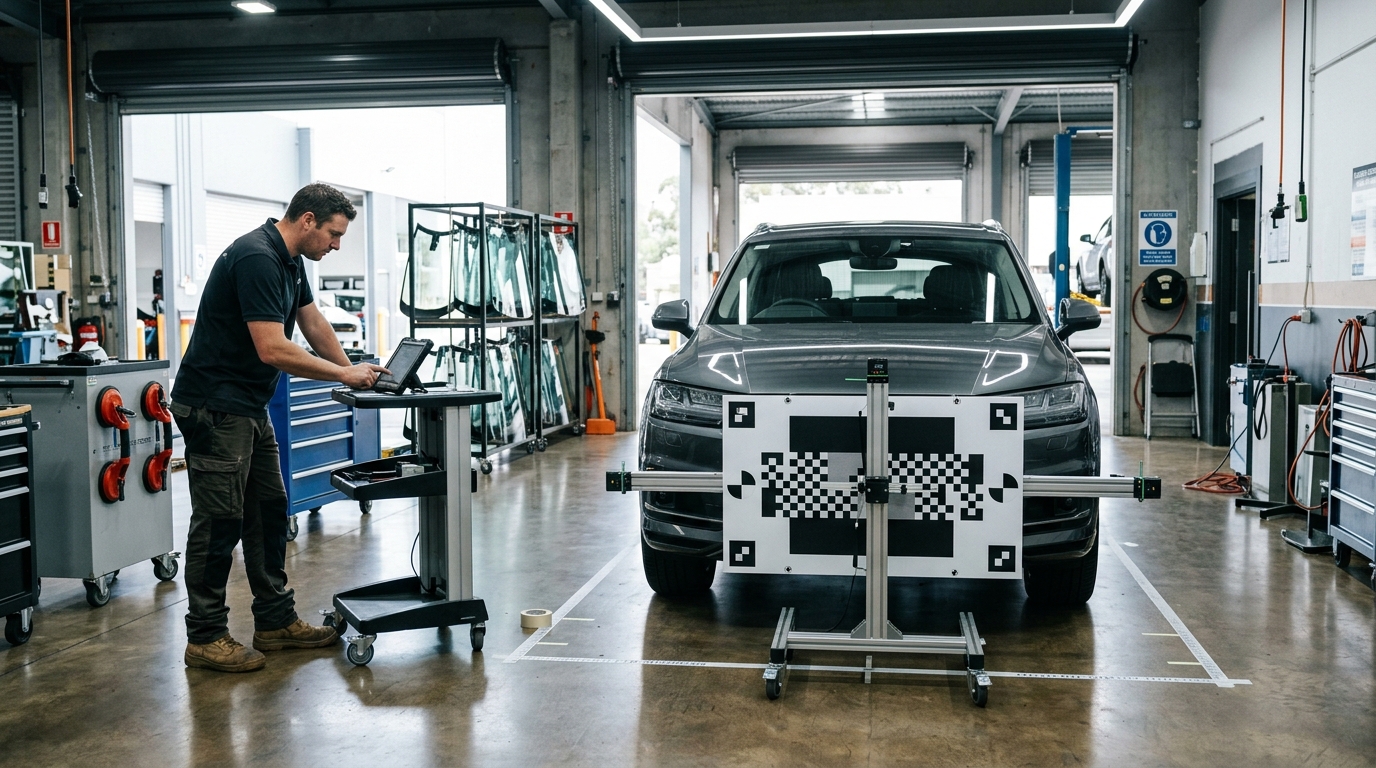
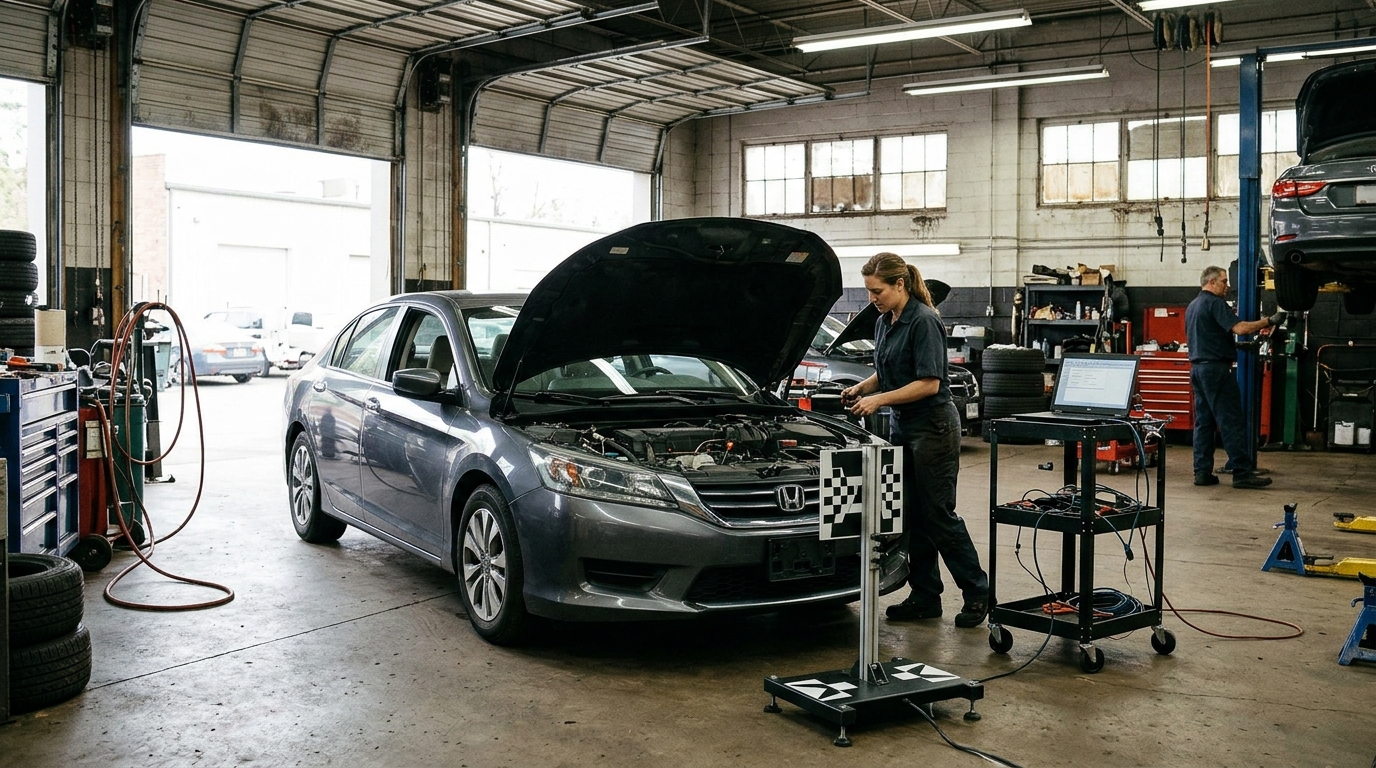
A camera near the rear-view mirror may need careful positioning after windshield replacement. Even small differences in angle can affect what the system sees. Some manufacturers specify static calibration using targets; others use controlled road procedures, and some require both. Only qualified service information can establish the method for a specific year, trim and sensor package.
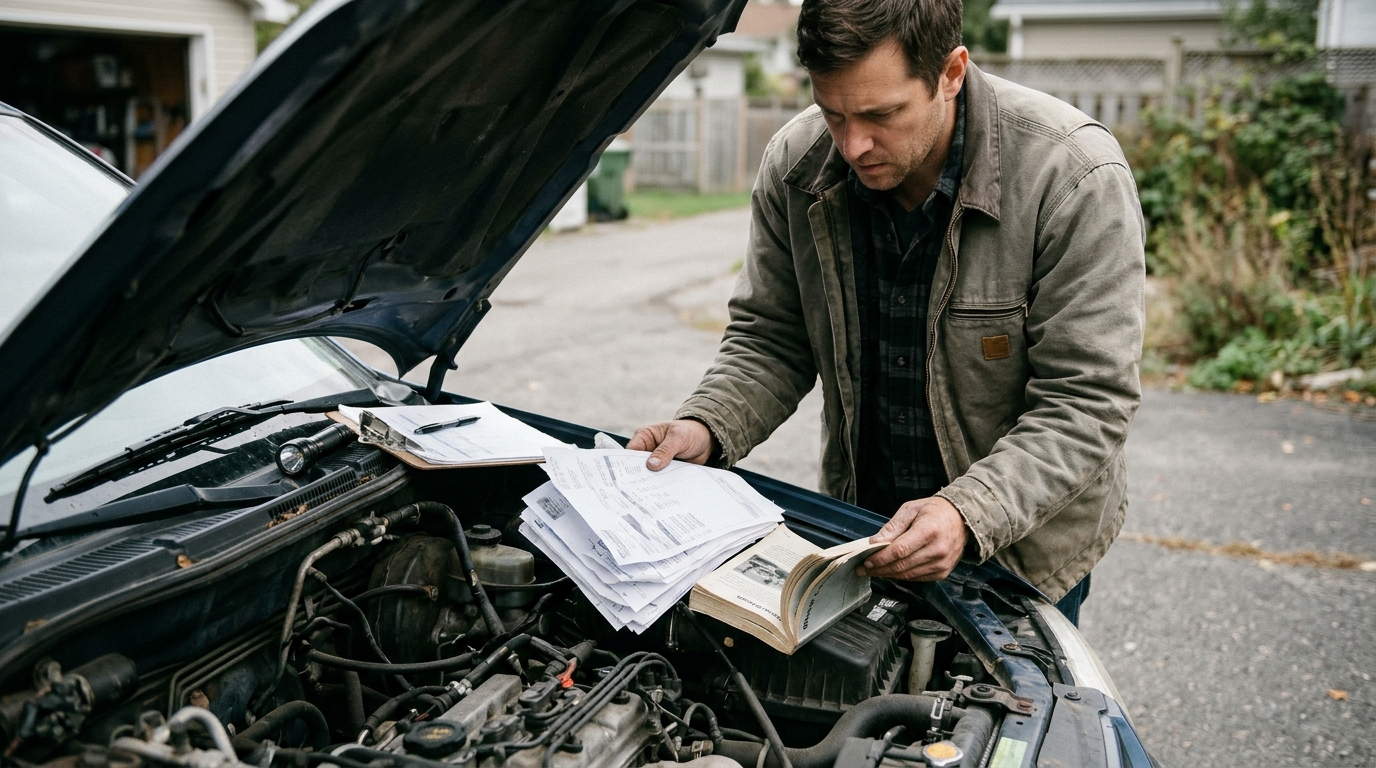
Look for repair invoices that identify whether parts were removed, replaced or recalibrated. A generic line reading ‘windshield installed’ may not answer the ADAS question. Ask the seller for documentation from the glass provider or body shop and seek independent review when it is missing. Do not assume a dashboard without warnings proves sensors are correctly aligned.
Ask about glass, bumper and front-end repairs
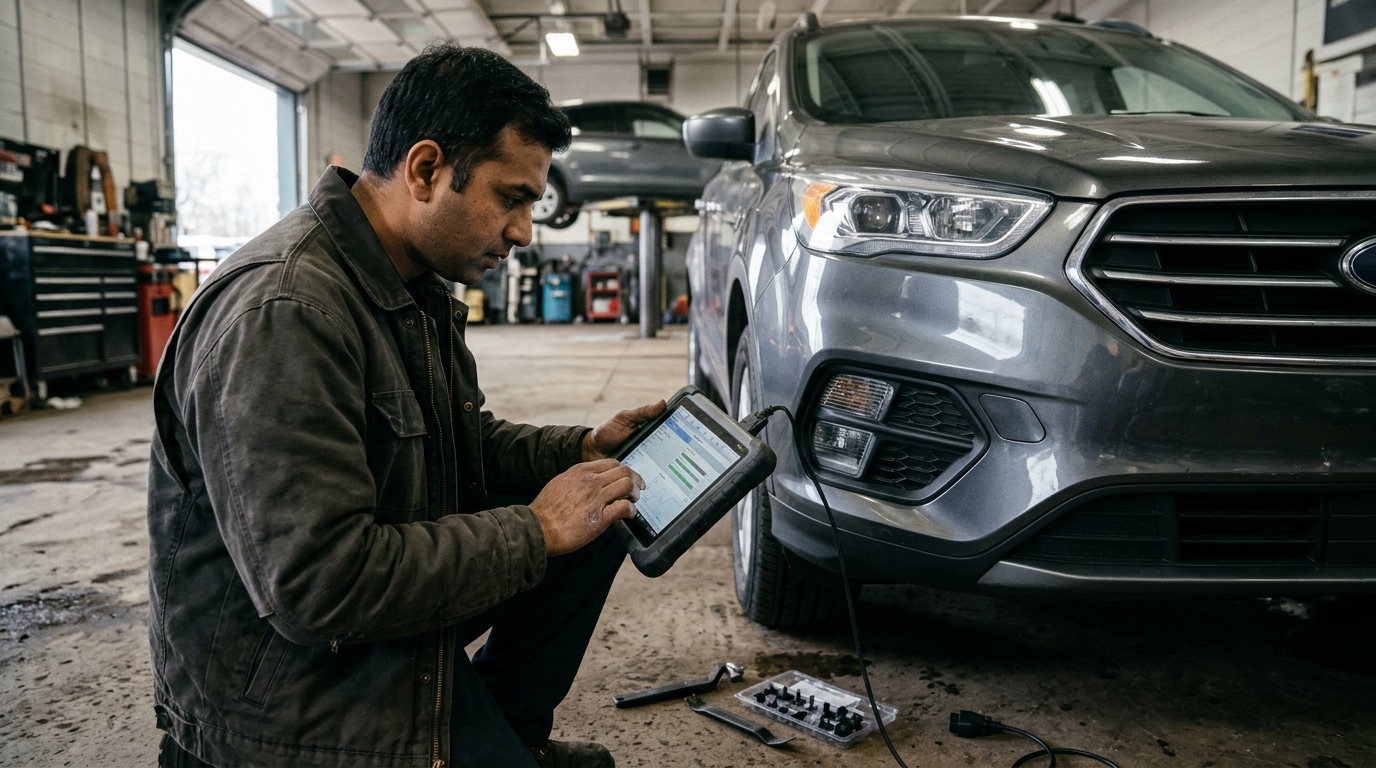
Bumper work can affect radar systems hidden behind the painted cover. Aftermarket parts, certain repairs or unusual coatings may interfere depending on the manufacturer. Avoid broad claims that every replacement bumper is unsafe; the important issue is whether repair materials and procedures meet the specific vehicle’s requirements.
Not every camera or sensor is visible from outside the car. Some components sit behind panels or logos, and some functions combine data from multiple devices. This makes a generic visual inspection insufficient for a complex car. A qualified shop can determine which modules are present and what diagnostic equipment is appropriate for that make and model.
Check warning lamps without provoking dangerous events
During a test drive, use normal caution. You should not deliberately create a near-collision to test automatic braking. Check whether warning lights illuminate and clear at startup, confirm basic menu settings and review the owner manual. Professional diagnostics provide more dependable evidence than risky attempts to trigger a safety feature on public roads.
A history report can reveal reported collisions or title events, but not every cosmetic repair or windshield claim. The seller’s detailed service records and a physical inspection remain valuable. Check paint alignment, panel fasteners and glass markings only as clues for asking questions, not as proof of hidden damage.
Recognize where assumptions break down
Calibration costs vary based on manufacturer, equipment and local labor. Ask for a written estimate if records suggest incomplete work. Buyers evaluating two similar cars should account for this cost alongside tires, brakes and insurance. A lower sticker price can become less appealing if expensive safety-system work remains unresolved.
ADAS terminology is confusing. Lane departure warning, lane keeping assist and lane centering are not interchangeable. Even advanced driver-assistance functions do not make a car self-driving. Read the specific owner’s manual to understand operating conditions, limits and driver responsibilities before trusting marketing shorthand.
Repaired vehicles should also be assessed for ordinary mechanical safety. An alignment problem, mismatched tire or damaged suspension can influence how a driver perceives lane-keeping assistance. Software calibration cannot compensate for every physical defect. A complete buying decision therefore includes chassis condition, tires, brakes and repair documentation alongside electronic features.
Practical steps for used car ADAS calibration
Sensor visibility matters during normal ownership. Snow, mud, heavy rain, road film or blocked cameras can degrade performance or disable features temporarily. Keep approved sensor surfaces clean, but do not attempt to realign hardware yourself. Driver attentiveness remains essential regardless of the technology installed.
Check the vehicle’s VIN for open safety recalls through NHTSA. A recall is different from a service bulletin or ordinary calibration recommendation. If a warning appears, document it and ask a qualified shop for diagnosis. Some systems may have software updates, and whether those are necessary depends on the actual vehicle configuration.
Evaluate evidence and next steps
Buyers often focus on whether a car has many ADAS features rather than whether those features work. For a vehicle that will carry family members daily, service history and repair quality may deserve more weight than the number of badges on the listing. A well-maintained simpler car can be a safer purchase than a poorly repaired feature-rich model.
When comparing used vehicles online, look for vague feature descriptions such as “self parking,” “autopilot” or “lane assist” without exact equipment names. Request the build specification and check which functions were standard, optional or unavailable on the trim. Paying more for an assumed capability is avoidable when a buyer takes time to verify the vehicle’s actual equipment.
Search VIN for unresolved safety recalls
If the seller cannot provide calibration evidence, the buyer can request an independent pre-purchase inspection with ADAS experience. Ask the inspector what can be tested, what remains uncertain and what records are missing. An ordinary mechanical inspection may not include specialized targets or sensor calibration equipment.
Arrange qualified ADAS inspection if records are unclear
The best used car ADAS calibration checklist turns a technical issue into questions buyers can answer: What repairs occurred? Which systems were affected? What service method was used? Who documented the result? That approach protects buyers without suggesting that technology replaces careful driving or regular maintenance.
A sound decision is sometimes to postpone the purchase until a seller provides missing documents or permits a specialist inspection. This does not mean the car is defective; it means the buyer lacks enough evidence to price the risk. Treat uncertainty as a real part of the purchase calculation instead of ignoring it because the test drive felt smooth.
Practical checklist:
- Identify vehicle year, trim and ADAS equipment
- Ask about glass, bumper and front-end repairs
- Request calibration invoices and shop documentation
- Check warning lamps without provoking dangerous events
- Search VIN for unresolved safety recalls
- Arrange qualified ADAS inspection if records are unclear
Common questions
Does a new windshield always require calibration? Requirements vary by manufacturer and vehicle. Follow the exact service procedure.
Does no dashboard warning mean calibration is correct? Not necessarily; service records and qualified diagnostics can reveal issues that a quick look misses.
Can I test automatic braking in traffic? No. Never create dangerous conditions to trigger a system.
Are ADAS features self-driving? No. Drivers must remain attentive and understand the systems limitations.
For related context, see the cariron.com guide. For authoritative reference, review this primary resource and additional official or technical guidance. Verify updates, dates and jurisdiction before applying general guidance to a specific situation.
Use this guide as a starting framework rather than a promise of a particular outcome. For used car ADAS calibration, the most useful next move is to verify the applicable details, preserve accurate information and make a decision based on the real conditions in front of you. When specialist advice, official instructions or a qualified inspection is appropriate, seek that input before a decision becomes difficult to reverse.